Key takeaways
- MX$750 per hour, per boat — the alcaldía’s own site says so, while the city’s visitor portal still shows MX$600 on one page and MX$500 on another. Two arms of one government, three prices: which number to trust.
- The crossover is three people. MX$1,500 ÷ MX$626.20 = 2.4. See the arithmetic, or how it decides which tour to take.
- A price quoted per person breaches the tariff, which is set per boat. You may also bring your own food and drink at no surcharge, and both problems are reportable at the dock attention modules — is Xochimilco a tourist trap.
- About 220 boats at Nuevo Nativitas, 17 at Belem de las Flores. No official quiet-dock list exists, but the CDMX government publishes counts, and counts are a usable proxy: which embarcadero to leave from.
- MX$8 from the Zócalo — MX$5 on Metro Line 2 to Tasqueña plus MX$3 on the Tren Ligero, which takes no cash at all. Getting there.
- 36 per square kilometre in 2014 is the last published axolotl density, and it is a density, not a headcount. What the numbers actually say.
What the MX$626.20 tour includes
The cheapest per-person way onto the water in this comparison, and the benchmark everything else here is measured against. Two to two and a half hours, meeting at Canal 237 on the Nativitas dike.
On the boat
- A live local guide, in English or Spanish
- Alcoholic and non-alcoholic drinks, and sweet treats
- One quesadilla or sope per person
- Music over a speaker, and a souvenir
- Free cancellation up to 24 hours before, reserve now and pay later
Not in the price
- Live music. The mariachi boat is extra; Infobae reported the 2024 tariff act setting a song at MX$300
- Tips, and any extra service you buy on the day
- Getting to the dock. You make your own way to Nativitas — see how to get there
- Anything you buy from the boats that come alongside mid-canal
How the hour actually goes
What happens between the dock gate and handing the boat back, in order.
There is no ticket window. You walk down to the water, pick a boat, agree a price and a length of time with the boatman out loud, and step on. Everything that goes wrong on a trajinera goes wrong in that first minute, before anyone has left the dock.
- At the gate — Agree the price and the duration before you board, out loud, with the person driving the boat. The official rate is MX$750 an hour for the boat. A price quoted per head is not the tariff.
- Boarding — Up to eighteen passengers, with children counted from age four. Life jackets have to be aboard; per the CDMX portal a passenger who declines to wear one signs a release, so wearing one is not compulsory.
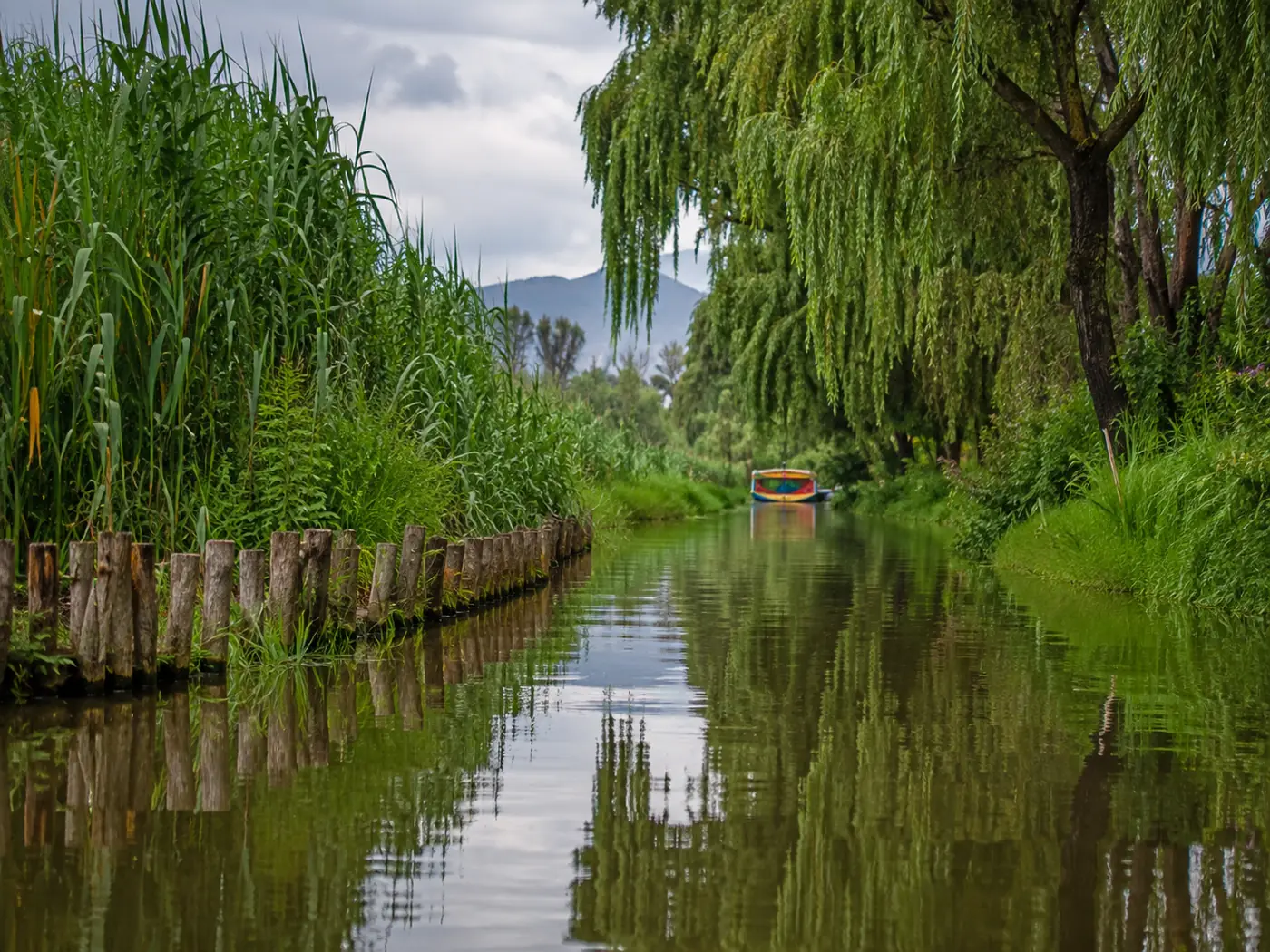
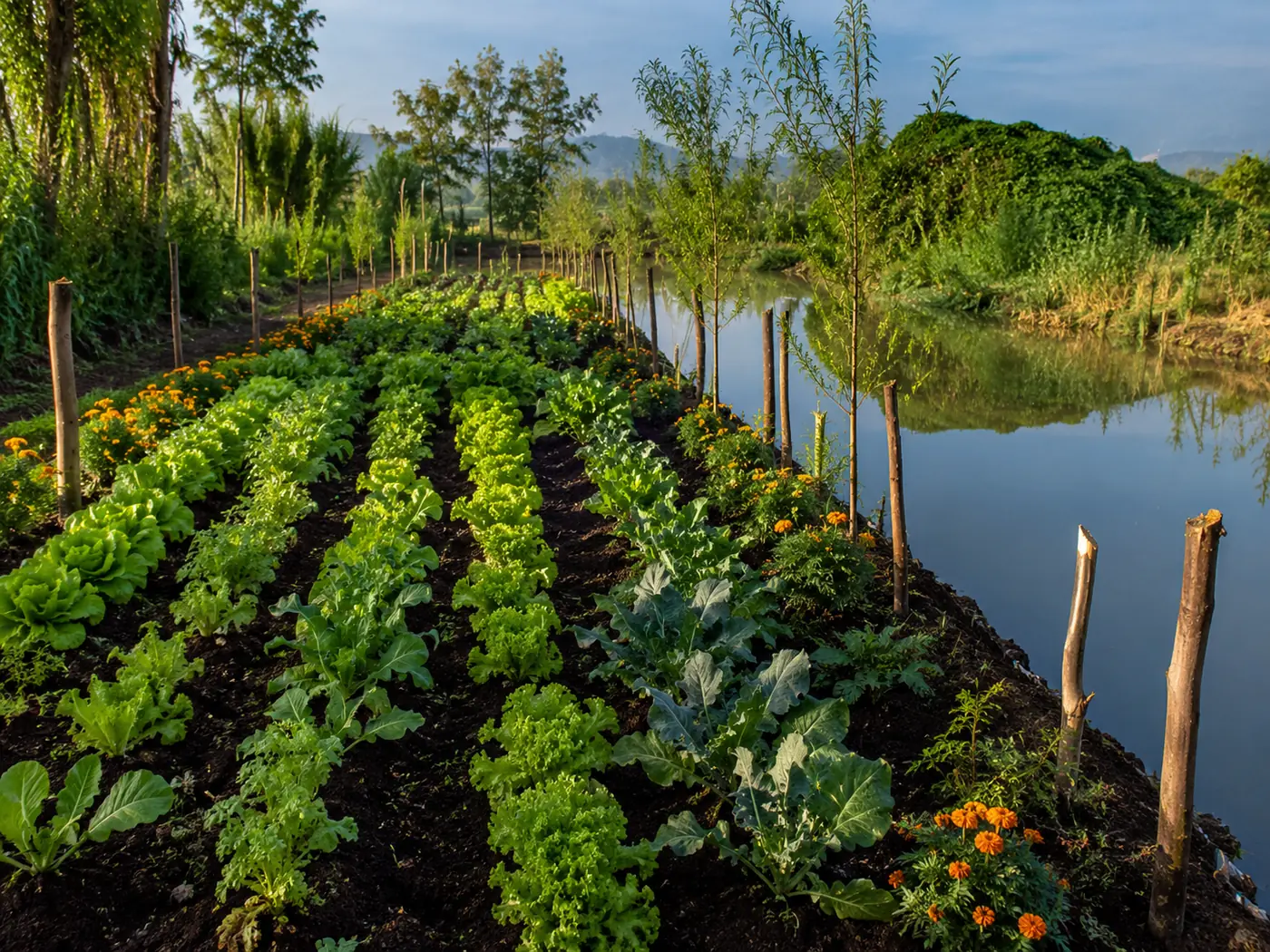
- Out among the chinampas — The canal narrows between chinampas, the raised garden plots, each one edged with ahuejote willows that hold the mud in place. They are anchored to the lakebed, not floating.
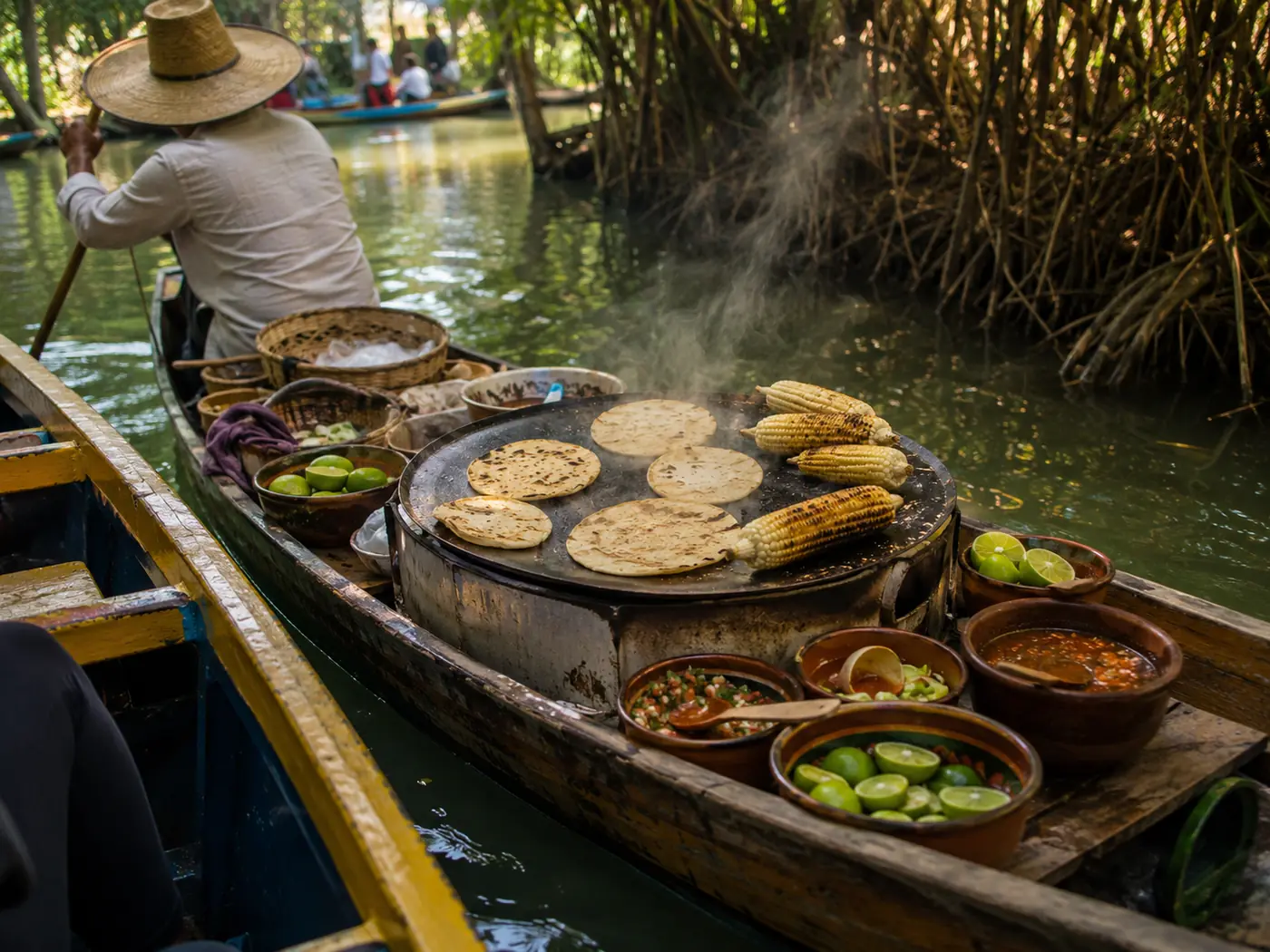
- The boats that come alongside — Food and drink are poled up to you mid-canal, and so is the mariachi boat. Infobae reported the 2024 tariff act setting mariachi at MX$300 a song and antojitos at MX$130.
- Back at the dock — Rubbish stays aboard — that is in the 2020 rules, and I would ask for it anyway. If you were charged per person, or charged for food you brought with you, both are reportable at the attention modules at the dock.
You are allowed to bring your own food and drink and there is no surcharge for it. Being charged for that is a documented scam, exactly like being charged per head. More in is Xochimilco a tourist trap and the complete guide.
How booking works
Count your group
One or two of you and a booked tour is cheaper per head. Three and up, hire the whole boat instead.
Check live dates
The widget below pulls real availability and prices from GetYourGuide, in Mexican pesos.
Reserve now, pay later
All eight tours here carry free cancellation up to 24 hours before departure.
Get yourself to the dock
Most of these start at the water rather than at your hotel. Read the meeting point before you pay.
The cheapest way onto the water, with live dates
Two to two and a half hours from Canal 237 on the Nativitas dike, with a guide, drinks, a quesadilla and a souvenir, at MX$626.20 a person. It is rated 4.9 from 631 reviews, which is the highest rating on this site with a review count worth trusting. Transport to the dock is not part of it.
The quiet one, the benchmark and the party boat
These three are not a good, better, best ladder. They are three different days out, and the middle one is the price everything else on the site is measured against.
| Mexico City: Kayak Experiences in Hidden Xochimilco | The benchmarkXochimilco: Traditional Boat Sightseeing Tour, Culture and Fun | Mexico City: Xochimilco Boat Party with Unlimited Drinks | |
|---|---|---|---|
| Price per person | MX$1,000 | MX$626.20 | MX$994.50 |
| Rating | 4.8 from 57 reviews | 4.9 from 631 reviews | 5.0 from 1,699 reviews |
| How long | 2.5–3.5 hrs | 2–2.5 hrs | 2–2.5 hrs |
| The vessel | A kayak, not a trajinera | Trajinera | Trajinera |
| Leaves from | No meeting point published | Canal 237, Nativitas dike | Emb. Las Flores Nativitas |
| Getting to the dock | Not stated | You make your own way | Operator states it is not included |
| Best for | Wanting the opposite of a party | Most people, and the price floor | A group that came to celebrate |
| View → | Book this → | View → |
Photo Gallery
Xochimilco at boat level
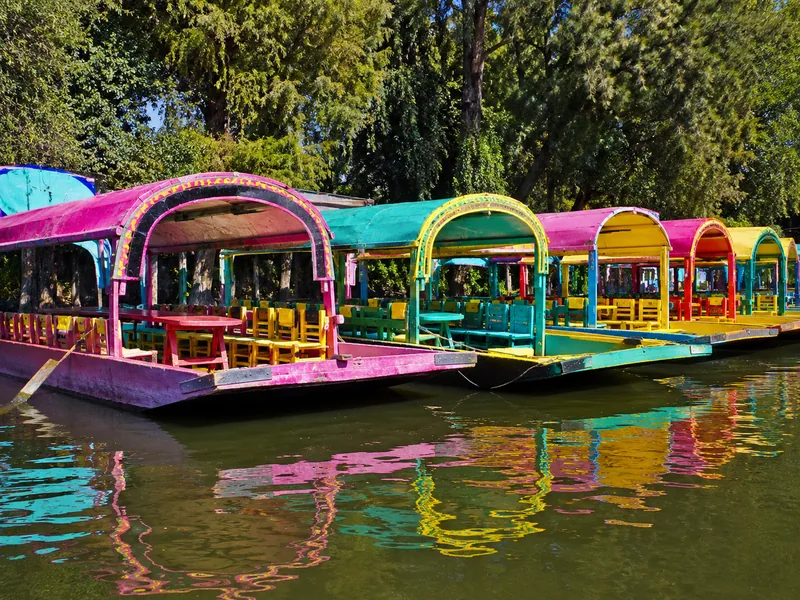
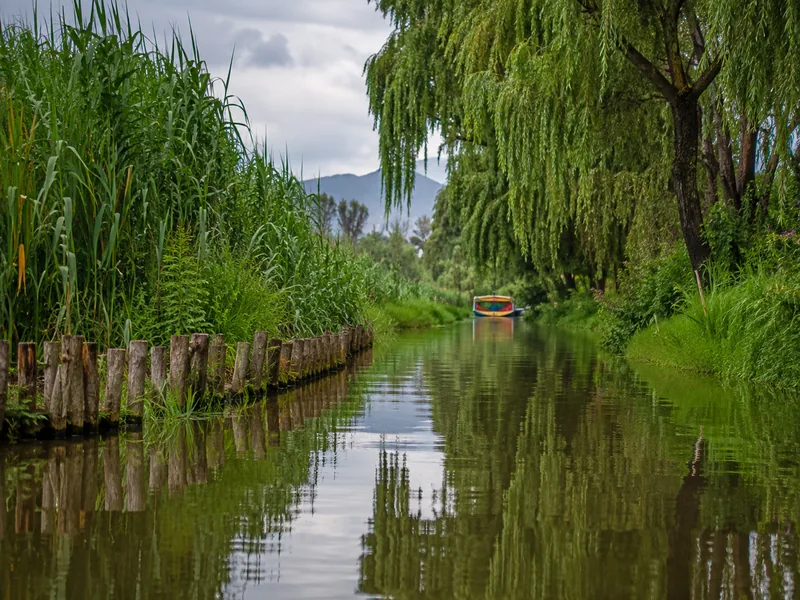
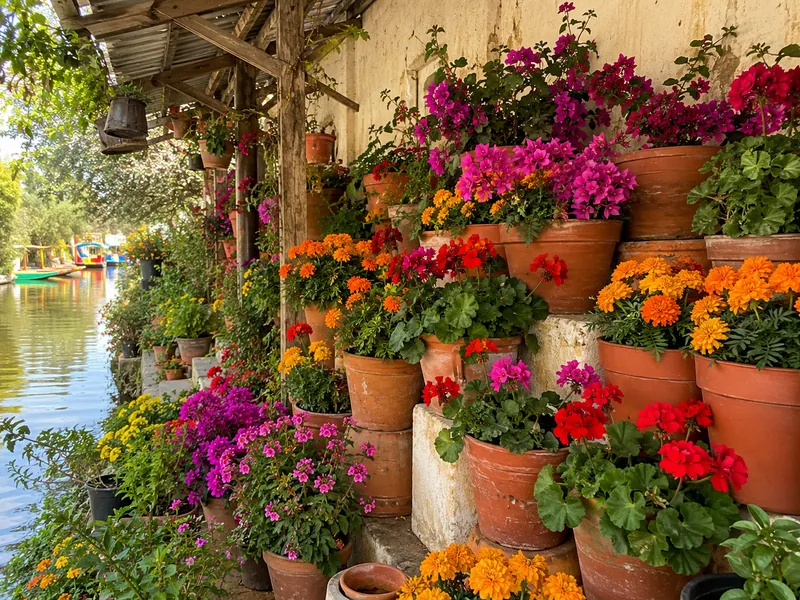
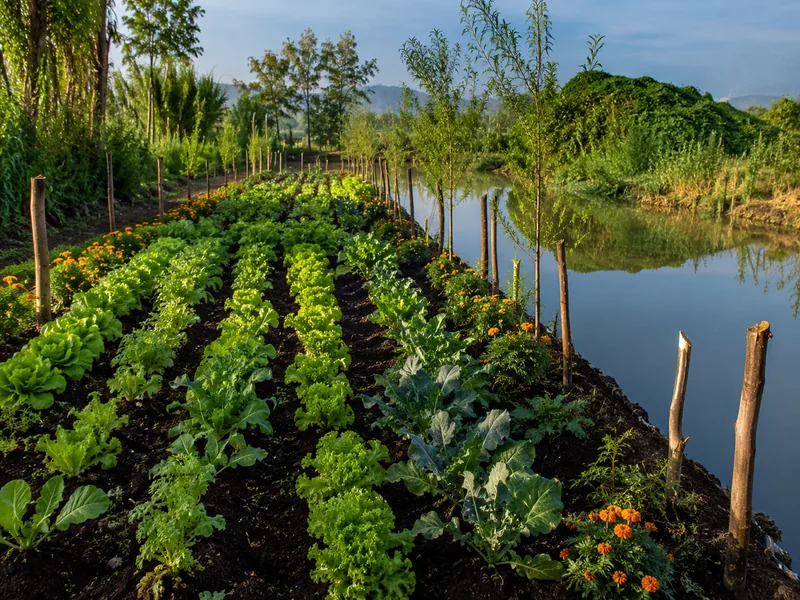
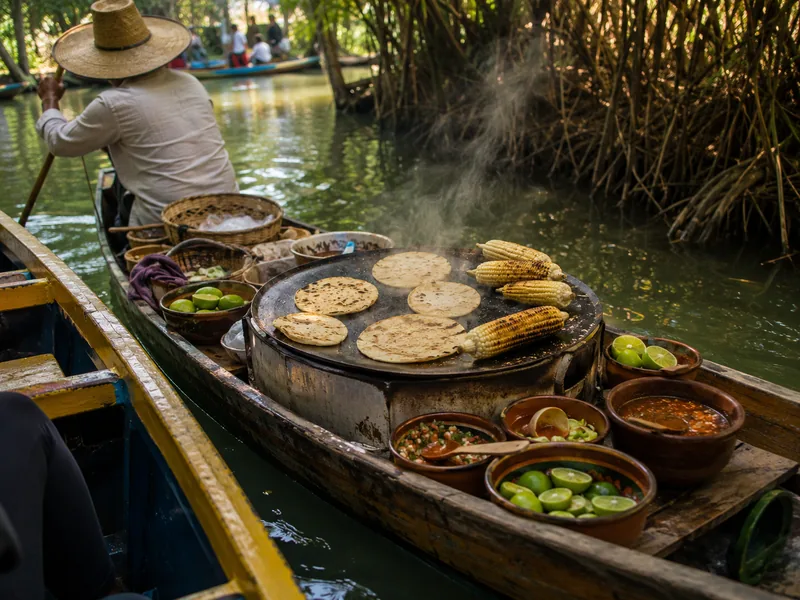
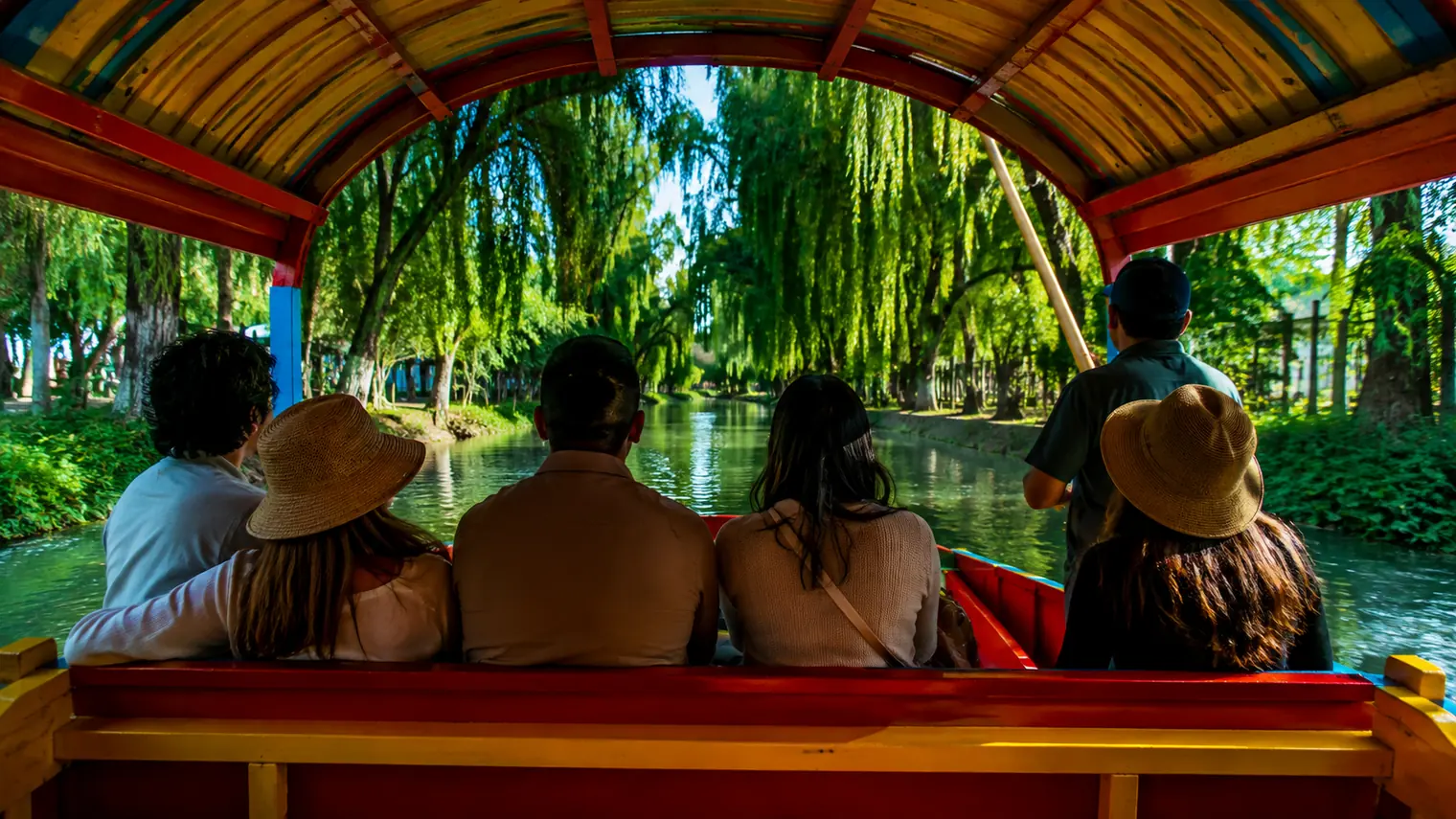
The boats, the water, the flowers on the landings and the chinampas still being farmed behind them — what a day out here actually looks like.
Six tours, cheapest first
Every price is per person and was read off each activity’s own page on 13 August 2026 with the currency set to Mexican pesos. Read them against MX$750 an hour for a whole trajinera, whatever the size of your group. Two more specialised trips — the food tour run by local women and the run out to Isla de las Muñecas — are the two dearest here at MX$1,100 and sit on the full list of all eight.
 Cheapest & best rated
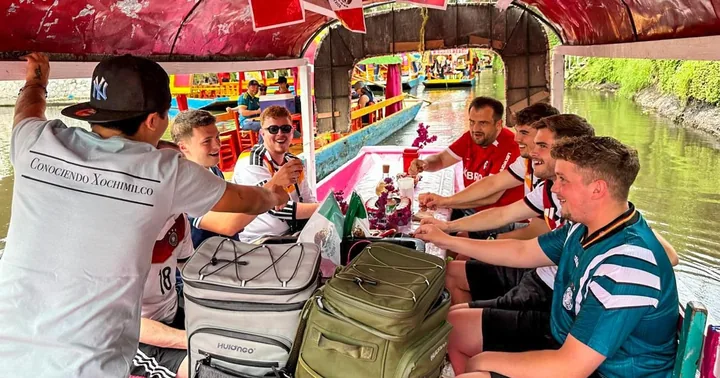
Xochimilco: Traditional Boat Sightseeing Tour, Culture and Fun
 Tasting-led
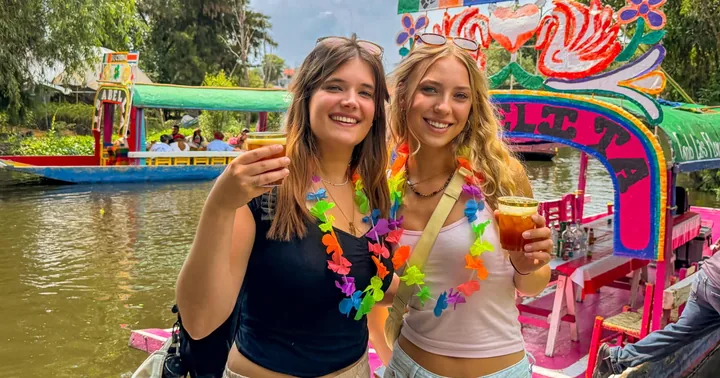
Xochimilco: Tequila-Tasting (Unlimited) and Cultural Party on a Boat
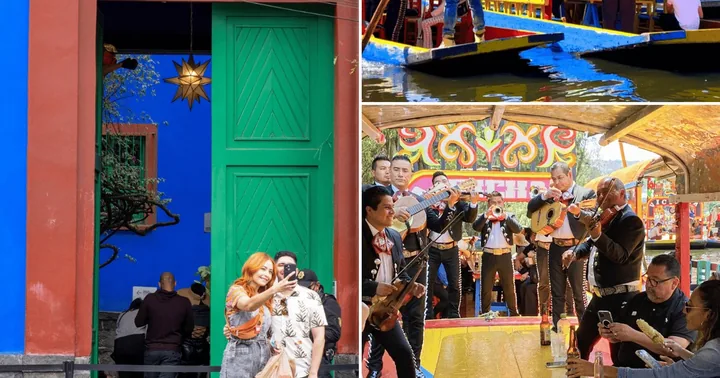 Most reviewedTransport from the city included
CDMX: Xochimilco, Coyoacán with Frida Kahlo & Optional Lunch
 Lowest rated herePickup from meeting point
Xochimilco & Colonial Coyoacán Trip
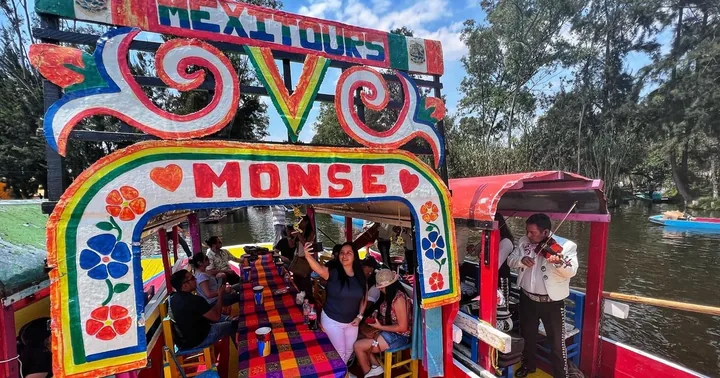
 The party boat
Mexico City: Xochimilco Boat Party with Unlimited Drinks
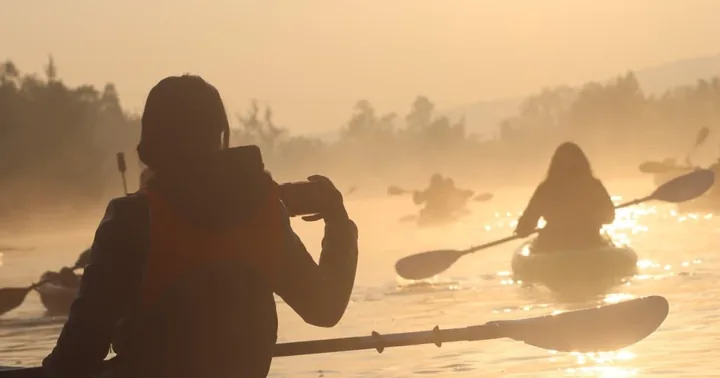 The quiet one
Mexico City: Kayak Experiences in Hidden Xochimilco
Quick answers before you book
The five things people get wrong about this place, answered short.
Book a tour, or hire a boat at the dock?
At one or two people the cheapest booked tour here, MX$626.20, costs less per head than a two-hour hire at MX$750 an hour. At three it doesn’t, and above three it doesn’t by a widening margin. See the full arithmetic or how to hire a boat yourself.
Which embarcadero should I leave from?
There is no official quiet-dock list, and anyone who tells you there is has made it up. What the CDMX government does publish is boat counts: about 220 at Nuevo Nativitas, about 215 at Caltongo, about 130 at Belem, about 51 at Salitre and 17 at Belem de las Flores. Treat that as a proxy, not a designation — which embarcadero.
What does it cost to get there?
MX$5 on Metro Line 2 to Tasqueña, then MX$3 on the Tren Ligero: MX$8 in all from the Zócalo. The catch is that the Tren Ligero takes no cash, so you need a Movilidad Integrada card at MX$20, which includes one trip. More in getting there.
Will I see an axolotl?
I wouldn’t plan a day around it. The last published density, from a 2014 UNAM survey, is 36 per square kilometre spread across roughly 203 km of canals — a density, not a total, and the widely quoted version of that number is wrong. The whole story.
How long do I need?
The tariff is hourly and most people take one or two. The booked tours here run two to two and a half hours, apart from the day trips. How long the ride is.
Can’t make these dates?
Browse more available Xochimilco boat tours and find one that fits your schedule — all with instant confirmation and free cancellation.
The complete guide to riding a trajinera in Xochimilco
I grow romerito and lettuce on two chinampas in San Gregorio Atlapulco, plots my family has worked since my grandmother’s time, and most mornings I pole out through the same canals the trajineras use an hour or two before the first of them leaves the dock. So this is not a list of things to feel. It is what I would tell a friend who asked me how the day actually works: what the boat is, what it costs in Mexican pesos, which gate to walk through, what the rules are, and what you will and will not see from the water.
What a trajinera is, and what the ride is like
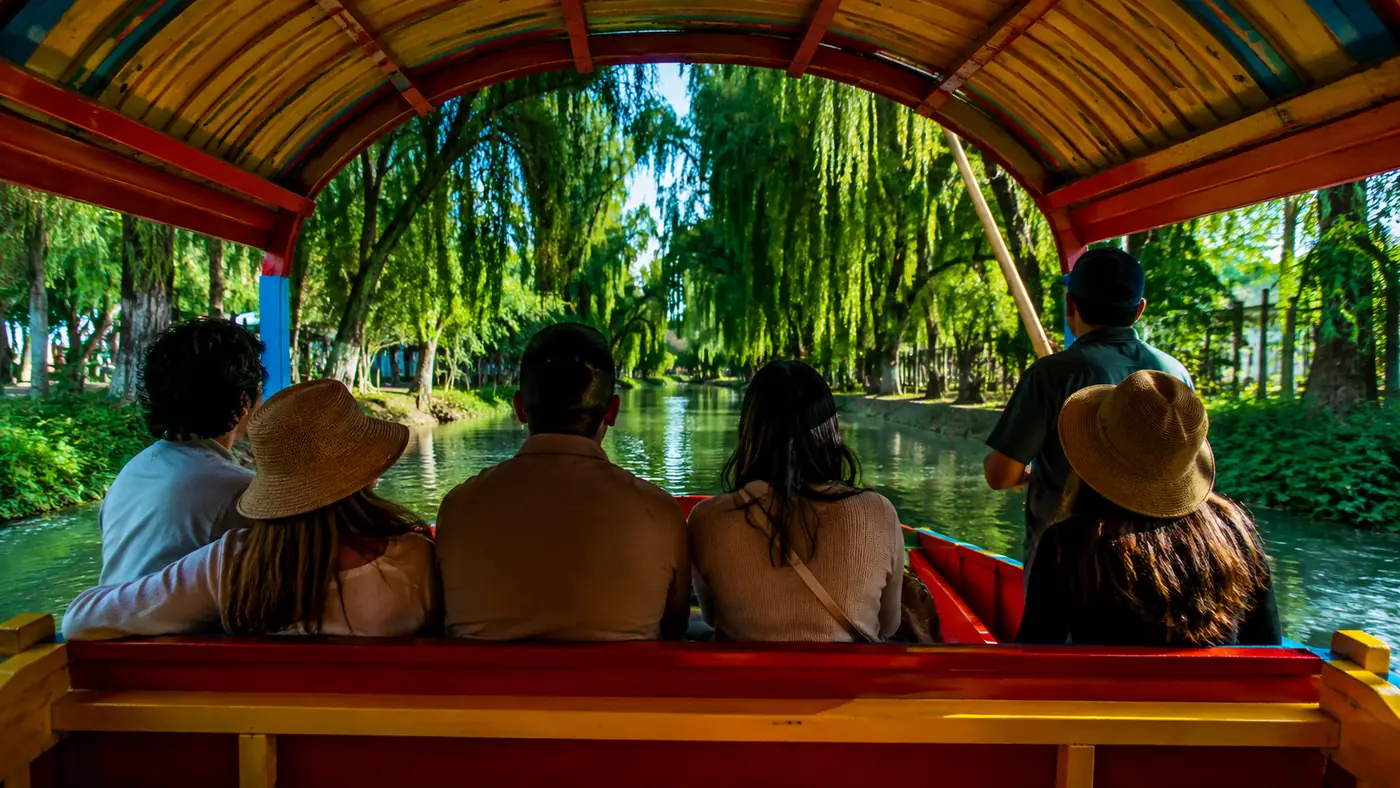
A trajinera is a flat-bottomed wooden boat with an arched canopy over a long table and two rows of chairs. No engine. Someone stands at the stern with a long pole and pushes. It carries up to eighteen passengers, and children count from age four. You do not buy a seat on one; you hire the whole boat and the person driving it, by the hour, and for that hour the boat is yours.
The ride itself is slower than people expect and louder than they expect. Walking pace, roughly. Boats pass close enough to pass a bottle across. Vendors pole up alongside you mid-canal with food, with drinks, with a mariachi group standing on their own flat deck. If you have read that Xochimilco is touristy, it is, loudly, on a Sunday afternoon, and most people find that is the fun of it. If you want the other version, go on a weekday morning and stay away from the biggest dock.
One structural thing worth knowing before you plan a time: the canopy is a roof, not a room. Trajineras are open at both sides under fabric or metal. That matters in July and it matters in January, and I come back to it under when to go.
The tariff, and why you will find three different prices
The Alcaldía Xochimilco states the rate on its own tourism page, in one sentence: the boats carry an official price of 750 pesos per hour of ride. In this site’s notation that is MX$750 an hour, for the boat. Not for a seat. Infobae reported the rise from MX$600 to MX$750 as published in the Gaceta Oficial de la CDMX and in force from 30 July 2024, and I have found no change since.
Now the reason you have seen other numbers. The city’s own visitor portal, run by a different arm of the same government, is still live and still shows MX$600 on one page and MX$500 on another, with its Xochimilco tips page marked 2022. Two government properties, three prices. I use the alcaldía’s figure because the alcaldía sets the tariff, and I am telling you the visitor portal is out of date rather than pretending the disagreement is not there.
Per boat is the whole economics of this place, so do the division before you decide anything. Booked tours run two to two and a half hours, so compare at a two-hour hire: MX$1,500 for the boat, whoever gets on it. Split two ways, MX$750 each. Split three ways, MX$500 each. Split six ways, MX$250. Split eighteen ways, MX$83.33. The cheapest booked tour on this site is MX$626.20 a person, so MX$1,500 ÷ MX$626.20 = 2.4, and the crossover is three people. Below three, a booked tour costs less per head and throws in a guide, drinks, food and a souvenir. At three and above, hiring wins and keeps winning. The long version, with every row, is on what a boat ride costs.
Two things follow that I would rather say out loud than bury. First: if there are four or more of you and one of you is comfortable agreeing a price in Spanish at a dock gate, hire your own trajinera and book nothing through me. Second: a price quoted per person is not the official tariff, and you are also entitled to bring your own food and drink aboard at no surcharge. Being charged for either is a documented scam and both are reportable at the attention modules at the docks. That is the checkable answer underneath is Xochimilco a tourist trap.
The same 2024 act set the side charges, as Infobae reported them: mariachi MX$300 a song, antojitos MX$130, a lancha colectiva MX$50 one way or MX$100 return, and a horse ride MX$135 for thirty minutes or MX$260 for an hour. Agree the number of songs before the first one, the same way you agree the hours before you board.
Which embarcadero to leave from
Start with what is not knowable. The alcaldía lists ten embarcaderos; a July 2025 El Universal list names eleven, so I say ten or eleven depending which official page you read. The only official classification is traditional route versus ecological / Zona Natural Protegida. There is no official quiet-dock list and no official party-dock list. Anyone selling you one has invented it.
What the CDMX government does publish is how many boats each dock has, and that is a usable proxy for how a dock feels on a Sunday. Nuevo Nativitas has about 220 and is the busiest, with parking, a large craft market, restaurants and horse rides. Caltongo has about 215 and began in 1943 as a produce dock. Belem has about 130 since 1960, and is a ten-minute walk from the Tren Ligero. Salitre has about 51, and the government’s own page calls it one of the oldest, discreet and small, working as a kind of bus stop for locals taking collective boats, suited to couples and small groups. Belem de las Flores has 17. Those are counts, not designations, and I would not stretch them further than that.
On the ecological side, Cuemanco opened in 1993 inside the ecological park, runs seven routes of one to five hours and has a plant market; Fernando Celada Miranda does guided environmental tours with protected-zone access. The Parque Ecológico de Xochimilco, 165 hectares, is officially described as offering the most pristine and naturalistic rides. Of the eight tours on this site, only two — the tequila tasting and the party boat — name a dock that appears on the CDMX government’s own venue list, Embarcadero Las Flores Nativitas. The rest I cannot tie to an official source, and I am not going to imply otherwise. More at which embarcadero.
Hours: all ten docks are open 365 days a year, per the alcaldía, but published hours exist for only a few of them — Nuevo Nativitas daily 06:00–22:00, Caltongo 09:00–22:00 year-round, Fernando Celada Miranda 08:00–18:00 on weekdays and 08:00–22:00 at weekends. There is no city-wide official closing time and no official last-departure time, so I will not publish one. Realistically the boats run about 09:00 to 18:00 and it varies by dock. See opening hours.
Getting there from the middle of the city
The docks are a long way south of where you are probably staying. The transit route is Metro Line 2 to Tasqueña, then the Tren Ligero south — 18 stations, about 13 km. The fares are MX$5 on the Metro and MX$3 on the Tren Ligero, so MX$8 in total from the Zócalo.
The thing that catches people out: the Tren Ligero takes no cash. You need a Movilidad Integrada card, MX$20, which includes one trip. Buy it at the Metro before you go south.
And the caveat I would want if I were you. This line has been rebuilt more or less continuously since mid-2025. Tasqueña closed in July 2025 for a planned month and stayed shut about nine; a promised reopening on 3 May 2026 was missed; full service resumed around 11 May 2026 under the name El Ajolote; it was partially suspended again between 28 May and 3 June 2026. On 13 August 2026 I could not confirm its status, because the operator’s own site blocks automated access. Check @STECDMX on the day and treat any timetable, mine included, as provisional.
The last mile is its own problem. Metrobús Línea 5 reaches Preparatoria 1 inside Xochimilco borough but no Metrobús reaches any embarcadero; you transfer to RTP route 142-B. From the Xochimilco light-rail station the docks are still a walk or a short ride — RTP 142-B runs from Francisco Goitia toward Nuevo Nativitas. Nativitas is not next to the station, whatever the map looks like. On ride-hailing I have nothing verified to give you: the apps cover Mexico City and Xochimilco is a Mexico City borough, but no operator or government page defines a service boundary here, so I will not quote you a fare or a drive time. The one solid tip is worth more than either: type the exact embarcadero name into the app, never just “Xochimilco”. The borough is large, the docks are scattered, and people get dropped at the wrong one constantly. Full detail on how to get there.
The rules on board
The current rules took effect on 30 January 2020 and I have found no change since. I have reconstructed them from press reporting plus a CDMX government summary page, because the Gaceta text itself was not readable, so treat the detail as reported rather than as something I read off the statute:
- Eighteen passengers maximum, children counted from age four.
- Alcohol brought aboard is limited to one bottle of up to one litre of spirits per boat, or a maximum of three 355 ml beers per adult. A visibly intoxicated passenger has service suspended and the boat returns to the dock.
- No sound systems of your own — no radios, speakers, generators or any high-decibel reproducer. Only the operator’s own system. No source anywhere gives a decibel figure, so do not believe one.
- Life jackets must be aboard. Per the CDMX portal, a passenger who declines to wear one signs a release, so wearing one is not compulsory.
- Stay seated. No standing at the bow or stern, hands and feet inboard, no jumping or transferring between boats, no tying boats together or blocking the canal.
- Rubbish stays aboard. I have a farmer’s opinion about this one.
- An intoxicated boatman is reportable at the tourism module.
One honest gap, because several tours on this site advertise unlimited tequila and beer. The alcohol rule as I have it governs what passengers bring aboard. I have no source at all on how it applies to a licensed operator serving drinks on its own vessel, and I am not going to invent a conflict between the two. Both statements stand as written; the relationship between them is something I could not verify.
What you are actually looking at
The banks are not banks. They are chinampas — cultivation platforms raised out of lakebed mud, separated by the canals you are floating in, and held at the edges by ahuejote willows (Salix bonplandiana) whose roots knit the sides together. Those posts standing in the water in rows are ahuejotes. Chinampas do not float. They are anchored to the lakebed. “Floating gardens” is the tourist name and not the mechanism, and while I am here, it is also not a translation of anything: Xochimilco is Nahuatl, not Spanish, and it is xōchi flower plus mīl(li) cultivated field plus -co, per UNAM’s Gran Diccionario Náhuatl. In the field of flowers. Not place of flowers — the field is the point. More on what Xochimilco means.
They are also still farms. The FAO recognised the chinampa system as a Globally Important Agricultural Heritage System in 2017, and its December 2019 figures counted about 20,922 chinampas of which 3,586 were actively producing — roughly 17 percent — growing 19,213 tonnes of food a year, lettuce 7,453 t, verdolaga 3,334 t, romerito 3,132 t, chard 1,352 t, plus 23 to 24 million ornamental plants. That is a 2019 count and I have nothing newer. The system covered something like 20,000 hectares in the fifteenth century against roughly 2,037 today. On age, be careful what you repeat: Frederick’s 2007 work states that claims extending chinampa agriculture before the Postclassic are unsupported by direct field evidence, so the defensible statement is documented from the Postclassic and intensively developed under Aztec rule, and never a founding century.
The landscape you are riding through is one half of a UNESCO World Heritage property — “Historic Centre of Mexico City and Xochimilco”, reference 412, inscribed in 1987 under criteria (ii)(iii)(iv)(v). It is a serial property of two components: the colonial centre, and these canals and chinampas 28 km south, described by UNESCO as the only surviving traditional pre-Hispanic land-use system in the basin. Worth being precise about what that protects: the inscription covers the canal and chinampa landscape, not the trajinera business. The boat is how you get to a World Heritage landscape.
Then there is everything that comes to you. Food boats pole up alongside mid-canal with a comal going, and this is where a lot of the day’s pleasure is. Remember the two prices from the 2024 act as Infobae reported them — MX$130 antojitos, MX$300 a mariachi song — and remember that you may bring your own and pay nothing extra for it. More on what else fills a day at what else there is to do.
One destination needs a warning rather than a description. The Isla de las Muñecas, the doll island, is real and sits in the Laguna del Teshuilo inside the protected area — but El Universal reported in February 2026 that at least two replica doll islands exist, one in the Apampilco canal and one in the Parque Ecológico near Cuemanco, and that visitors are routinely taken to those instead. The custodian family holds a copyright certificate on the name from the Registro Público del Derecho de Autor, which is the checkable sign that the problem is real: nobody registers a name nationally for fun. It is also a different product from an hour on the canals — El Universal reports one and a half to two hours each way from the central docks, so a realistic round trip is about four hours, reported at roughly MX$3,000 for the boat at the official hourly rate, with island entry reported at MX$100 for Mexicans and MX$150 for foreigners per person on top. Agree it with the boatman before you board, and ask which island you are being taken to. See Isla de las Muñecas.
The axolotl question, answered with numbers

A lot of people come here hoping to see one, so let me give you the measurements and let you draw the conclusion, because no source I can find states the answer either way.
The ajolote is endemic to Mexico and now survives in the wild only in the Xochimilco canal system. The IUCN lists it as Critically Endangered (assessment e.T1095A53947343, Red List v2020-3, with no newer reassessment as of August 2026); Mexico’s NOM-059 lists it as en peligro de extinción and CITES has it in Appendix II. The density series from UNAM’s Instituto de Biología, under Dr Luis Zambrano, runs like this: 6,000 per km² in 1998, down to 100 per km² in 2008, nothing at all caught in about three months of netting in the 2013 pilot phase, and 36 per km² in 2014, which is the last published figure. There is an intermediate datapoint of 1,000 per km² whose year I am leaving out, because sources give three different ones and I would rather have a gap than a guess.
Now the correction that matters more than any of it. 36 is a density per square kilometre. It is not a headcount. UNAM’s own CCH bulletin rendered it as “only 36 individuals remained” and that error is now everywhere. Separately, and not comparably, the IUCN’s 2020 assessment estimates 50 to 1,000 mature individuals remaining — a different kind of number, arrived at a different way, and not to be mixed with the density.
So: 36 per km² as of 2014, across roughly 203 km of canals, in water fed substantially by treated wastewater, where professionals netting for three months in 2013 caught nothing, and where a 2002–03 effort of more than 1,800 net casts over 39,173 m² caught 42 animals against two in 2013. I am not going to tell you that you will not see one, because no source says that. I am telling you what has been measured. UNAM’s Vivian Crespo, on the idea of releasing captive animals into the canals, put the habitat problem plainly: “The water just isn’t clean enough. If we were to release all the axolotls from the laboratory here now, it would be a bloodbath.” Carp and Nile tilapia are established in the canals and eat axolotl eggs and larvae, and both are named as key threats in the IUCN assessment.
A new UNAM census ran from September 2024 to February 2025. As of August 2026 no result has been published — Zambrano has said preliminarily that axolotls are still present but in lower numbers than 2014, with DNA analysis pending. Any “2025 axolotl count” you find circulating is not a released UNAM figure. If you want to actually see one, Michmani, by Embarcadero Cuemanco, is listed on the CDMX government’s venue directory as holding a wildlife refuge with axolotls, 07:00–19:00 daily, tel 5676-1219 — listed as, not is, because the page carries no date. The full working is on the axolotl page.
The water
About 203 km of interconnected canals. On depth, the only official bathymetry I could find is the Programa de Manejo for the protected area, published in the Gaceta Oficial on 11 January 2006: roughly 60 cm in some canals and flooded areas and 3 to 6 metres in others. That is twenty years old and nothing newer has been published, so read it as a 2006 measurement rather than a current one.
Where the water comes from explains most of the rest. The canals are fed substantially by treated wastewater — 2.01 m³/s from Cerro de la Estrella, 0.060 from San Luis Tlaxialtemalco, 0.035 from San Lorenzo Tezonco — because the historic spring and aquifer flow, up to 10.8 m³/s, was lost to groundwater extraction. No government body publishes any statement about whether contact with the water is safe, so I am not going to tell you that authorities warn anything. Here is what has been measured instead. Salud Pública de México in 2003 found the treated effluents met the irrigation standard but that canal sites near sewage leaks substantially exceeded it, and isolated antibiotic-resistant E. coli. Four years of citizen-science monitoring at eight sites, published in Freshwater Science in 2019, found sites exceeding guidelines for pH above 9, total coliforms above 240 CFU per 100 mL, conductivity above 2,000 µS/cm and dissolved oxygen below 6.5 mg/L, with only one site meeting most guidelines — an area of abandoned chinampas. PLOS ONE in 2025 reports untreated discharge and agricultural runoff as ongoing. Draw your own line about what you put your hands in; the numbers are on is the water clean.
For completeness on who runs what: SACMEX manages the water, SEDEMA the protected natural area — Ejidos de Xochimilco y San Gregorio Atlapulco, 2,522.43 hectares — and the wetland is Ramsar Site No. 1363.
When to go
The advice everybody repeats is go on a weekday, go in the morning. I think it is right, but I want to be straight with you: no official visitor-numbers-by-day data exists for Xochimilco. That advice is universally reported and entirely unsourced, so take it as practical folklore, not statistics.
The morning half of it does have a physical reason behind it, though. Mexico City airport normals for 1991–2020 — via a climate-reference site, not from SMN, whose own service I could not reach — put highs at 21 to 27 °C year-round and lows at 6 to 14 °C. The wet season runs May to October, wettest in July at about 160 mm across 17 rain days; November to April is dry, 5 to 15 mm. And the rain arrives as afternoon and evening showers. On a boat that is open at both sides, a downpour at 15:00 in July is a completely different trip from the same route at 10:00. At about 2,240 metres the daily swing is wide too, so evenings on the water are genuinely cold from December to February — take a layer you would not otherwise pack. See what to wear and the best day to visit.
Two dates for the calendar. La Flor Más Bella del Ejido runs 22–29 March 2026, the 239th edition, free entry, with 1.5 million visitors expected — announced by Mayor Circe Camacho. It is the one hard crowd number I have, and it is a large one. (The 239th edition implies a long history; no source gives a founding date, so I won’t.) And La Llorona en Cuemanco runs Friday to Sunday at 18:00 and 21:00 from Embarcadero Cuemanco, bilingual, at MX$750 per person including the trajinera and the show. Its official site gives 2 October to 22 November 2026; two outlets give 31 May to 22 November. I am citing the official window and telling you the sources disagree.
What I would actually do
Count your group first, before you look at a single tour. One or two of you: book something. The cheapest booked tour here is MX$626.20 a person, which is less per head than hiring the boat for two hours, and it comes with a guide, drinks, food and someone else solving the dock for you. Three or more of you, and especially four or more: walk down to the water, agree MX$750 an hour out loud before you board, and keep the difference. I would rather you did that and came back to read what else there is to do than book something you did not need.
Either way: agree the price and the hours before you step on. Bring your own food if you want to, because you are allowed to. Take your rubbish off with you. And if you were hoping for an axolotl, go for the willows, the plots and the water instead — those are certain, and the rest is a number.
Ready to compare? All eight tours, the cost breakdown, or which one to pick.
Frequently asked questions
How much does a boat ride in Xochimilco cost?
The Alcaldía Xochimilco publishes an official rate of MX$750 an hour, and that buys the whole trajinera rather than a seat — the boat holds eighteen. The city’s own visitor portal still shows MX$600 on one page and MX$500 on another, and its tips page is marked 2022, which is why a search turns up three prices; the alcaldía figure is the current one. Booked per-person tours on this site start at MX$626.20. Full breakdown on what a Xochimilco boat ride costs.
Is it normal to be charged per person at the dock?
No. The tariff is set per boat per hour, so a price quoted per head is not the official rate. You may also bring your own food and drink at no surcharge, and being charged for that is a documented scam. Both are reportable at the attention modules at the docks — more in is Xochimilco a tourist trap.
Do I need to book a Xochimilco boat tour in advance?
You don’t need a booking to ride. The docks are open 365 days a year and hiring a boat is a conversation at the waterside. What booking buys is a fixed per-person price, a guide and free cancellation up to 24 hours before, which is worth a great deal more to a couple than to a group of eight. See do you need to book.
Which embarcadero is best?
The only official classification is traditional route versus ecological zone; there is no official quiet-dock list. The CDMX government does publish vessel counts — about 220 at Nuevo Nativitas, about 215 at Caltongo, about 130 at Belem, about 51 at Salitre and 17 at Belem de las Flores — and the government’s own page calls Salitre discreet and small. That is a proxy for how busy a dock feels, not a designation. See which embarcadero to leave from.
How do I get to Xochimilco from the center of Mexico City?
Metro Line 2 to Tasqueña, then the Tren Ligero south: 18 stations, about 13 km, MX$5 plus MX$3, MX$8 in all. The Tren Ligero takes no cash, so you need a Movilidad Integrada card at MX$20 including one trip. The line has been under near-continuous reconstruction since mid-2025 and I could not confirm its status on 13 August 2026, so check @STECDMX on the day — details in getting there.
Can I see an axolotl from a trajinera?
No source says yes and no source says no, so here are the measurements: the last published density is 36 per square kilometre from a 2014 UNAM survey, spread over roughly 203 km of canals fed substantially by treated wastewater, and a professional netting effort in 2013 caught nothing in about three months. Draw your own conclusion. The number 36 is a density per square kilometre, not a count of surviving animals, whatever you have read — the axolotl page works through it.
How long is the boat ride?
The tariff is hourly, so the ride is as long as you agree to pay for, and one or two hours is what most people take. The booked tours here cluster at two to two and a half hours, apart from the day trips at five and nine to ten hours. El Universal reports one and a half to two hours each way for a trajinera out to the Isla de las Muñecas from the central docks, which is a different trip entirely — see how long the boat ride is.
Is the canal water clean?
No authority publishes a statement on whether contact with it is safe, so I will give you the measurements instead. Four years of citizen-science monitoring at eight sites, published in Freshwater Science in 2019, found sites exceeding guidelines for pH above 9, total coliforms above 240 CFU per 100 mL and dissolved oxygen below 6.5 mg/L, with only one site — an area of abandoned chinampas — meeting most of them. See is the water clean.
Still have questions? Email us [email protected]